Leave Your Message
China’s plastic packaging market is broad, fast-moving, and difficult to judge from a product catalogue alone. A supplier may offer flexible pouches, bottles, containers, or protective films, yet the real differences often appear in production details. Think of clean seal edges, even wall thickness, sharp print registration, and samples that match the final order. Small details matter.
Ellen MacArthur, a leading circular-economy voice on plastics, has said, “We need to fundamentally rethink the way we make, use and reuse plastics.” That perspective matters when comparing Plastic Pack suppliers. Price is only one part of the decision. Buyers should also examine material specifications, quality-control processes, customization options, production capacity, and communication during sampling. Ask how defects are recorded, how changes are approved, and whether stated certifications can be independently checked. A polished website is not proof of reliable production.
There is no universal ranking that suits every buyer. A small order for printed pouches has different needs from a large run of rigid containers. This guide will introduce notable Chinese suppliers and explain what to compare before requesting a quotation. It will also point out where public information may be incomplete. That gap deserves attention. Supplier claims can sound similar, and I would not treat a low quote or attractive sample as enough evidence. Compare like with like, request current documentation, and confirm the details in writing before making a decision.
Understanding China's Plastic Packaging Industry
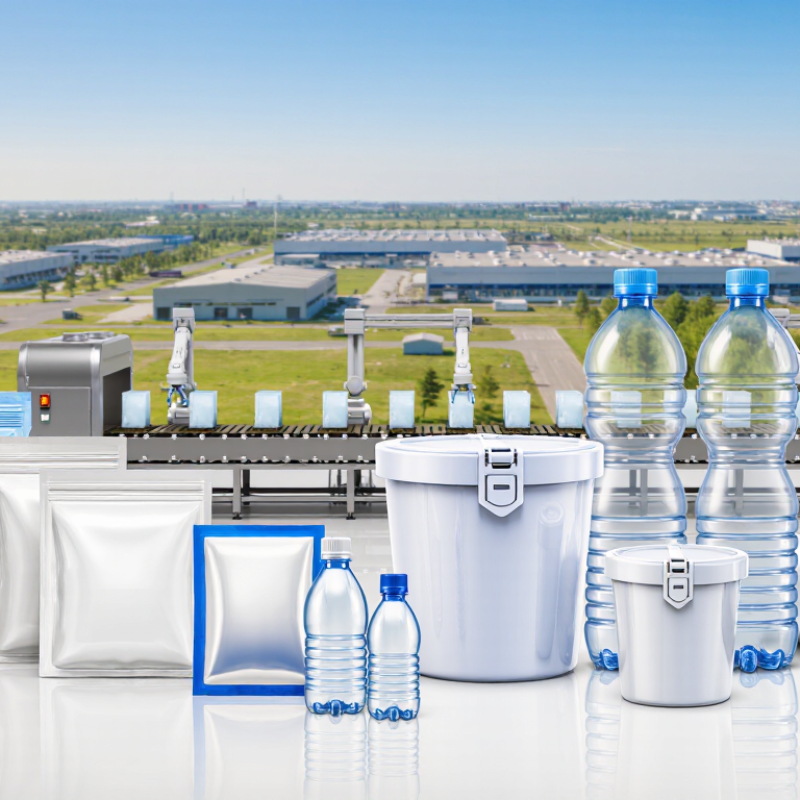
China’s plastic packaging sector combines resin processing, film extrusion, injection molding, and container production. Its scale is substantial. The China Packaging Federation reported that plastic packaging containers and products generated about RMB 455.6 billion in operating revenue in 2023, roughly 39.5% of the packaging industry’s total. The National Bureau of Statistics reported 74.885 million tonnes of plastic products produced that year. These figures cover broad product categories, not packaging alone, so they should not be treated as direct measures of packaging output.
For buyers comparing suppliers, production capability is only part of the picture. A flexible-film factory may specialize in printing and lamination, while a rigid-packaging plant may focus on injection or blow molding. Ask how a supplier controls film thickness, seal strength, color consistency, and batch traceability. Details matter. A factory tour can reveal practical clues: clean material storage, calibrated testing equipment, and clear records for each production run. Yet reported revenue and machinery lists cannot confirm consistent quality. Request samples and test them under real filling, transport, and storage conditions. The figures describe a large industry, but they leave room for a less comfortable question: how consistently can an individual supplier meet specifications over time?
| Supplier Category | Typical Products | Common End Markets | Relevant Capabilities | Procurement Considerations |
|---|---|---|---|---|
| Flexible packaging converters | Plastic films, printed rollstock, pouches, and laminated packaging structures | Food, personal care, household products, and consumer goods | Film extrusion, printing, lamination, pouch making, and conversion to customer specifications | Confirm required barrier performance, sealing compatibility, print requirements, and whether the structure is suitable for the intended recycling system. |
| Rigid container manufacturers | Bottles, jars, tubs, and other molded plastic containers | Food and beverages, cosmetics, personal care, and household chemicals | Injection molding, blow molding, container design, and production of containers in different shapes and capacities | Check resin suitability, closure fit, wall strength, leak resistance, and food-contact compliance where relevant. |
| PET bottle and preform suppliers | PET preforms and bottles, commonly used for beverages and other liquid products | Bottled water, soft drinks, edible oils, and personal-care products | Preform molding, stretch blow molding, and production matched to bottle specifications and filling lines | Verify neck finish, bottle weight, clarity, pressure or top-load requirements, and compatibility with the customer’s filling equipment. |
| Protective packaging manufacturers | Foam cushioning, protective films, air-cushion products, and molded protective components | Electronics, appliances, furniture, e-commerce, and industrial goods | Cutting, converting, molding, and design of protective packaging for handling and transport | Specify the product’s fragility, package dimensions, shipping conditions, and any requirements for reuse or material recovery. |
| Plastic bag and sack producers | Carrier bags, liners, refuse bags, and industrial or agricultural sacks | Retail, logistics, food distribution, agriculture, and manufacturing | Film blowing, bag conversion, printing, and production in different sizes, thicknesses, and formats | Confirm the intended use, dimensions, load requirements, applicable local rules, and the requested recycled-content or recyclability specifications. |
| Agricultural film manufacturers | Greenhouse films, mulch films, and other films used in crop production | Crop cultivation, horticulture, and agricultural operations | Film extrusion and formulation for specified thickness, light transmission, and service-life requirements | Match film properties to the crop and growing conditions, and establish a plan for collection and end-of-use handling. |
This overview describes common supplier segments in China’s plastic packaging industry rather than identifying or ranking individual companies. Actual product availability, certifications, and performance depend on the supplier and the specific order.