Leave Your Message

China Top 10 Plastic Pouch Manufacturers for Global Buyers

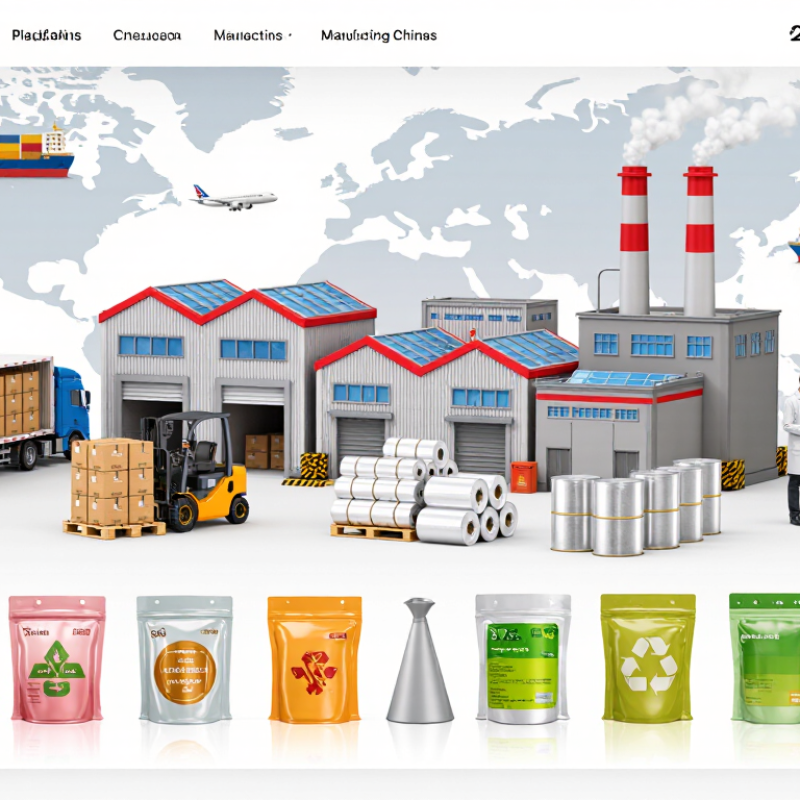
China remains a major sourcing base for flexible packaging, including stand-up, flat, spouted, retort, and recyclable Plastic Pouches. Its manufacturers serve food, beverage, personal care, household, and industrial packaging markets worldwide.

Industry data explains the opportunity. Grand View Research valued the global flexible packaging market at approximately USD 261.4 billion in 2022. Its report forecasts continued growth through 2030, supported by convenience, lightweight transport, and improved barrier technologies. The Smithers study, The Future of Flexible Packaging to 2028, also identifies pouches as important formats for lightweight and portion-controlled packaging. However, market figures differ between reports. Definitions, regions, and material categories are not always consistent.

This guide introduces China’s top 10 Plastic Pouch manufacturers for global buyers. The selection considers production experience, export capability, quality systems, material options, printing accuracy, sealing performance, and customization support. Certifications such as ISO 9001, BRCGS, FDA, or EU food-contact compliance may strengthen supplier credibility, but certificates alone prove little. Buyers should request recent audit records, migration test results, sample pouches, and batch traceability documents. A pouch should survive a warehouse shelf, a delivery truck, and repeated handling at home.

Details matter.

A supplier may offer attractive prices but weak zipper alignment. Another may provide excellent printing but limited recycling solutions. The OECD’s Global Plastics Outlook highlights packaging as a leading plastics application and stresses the need for better circularity. Therefore, this ranking is a practical starting point, not a permanent verdict. Factory capacity, technology, and compliance can change. Careful verification remains essential before signing any contract.

China Top 10 Plastic Pouch Manufacturers for Global Buyers

Industry Baseline: Flexible Packaging Exceeded US$200 Billion in 2024

Flexible packaging exceeded US$200 billion in 2024, according to widely cited industry estimates. The figure includes pouches, films, sachets, bags, and related formats. Definitions differ across research firms, so the number is a useful baseline rather than an exact industry ledger. Still, it shows the scale behind today’s pouch manufacturing market.

For global buyers, this growth changes the supplier evaluation process. A capable manufacturer should explain film structures, sealing temperatures, barrier performance, and filling compatibility. Practical checks matter. Request production samples, migration documents, test reports, and recent quality records. A pouch may look attractive, yet fail after heat exposure or repeated handling. Small details matter, such as zipper alignment, ink adhesion, and seal width.

The top ten manufacturers should not be judged by factory size alone. Buyers need evidence of consistent output, realistic lead times, and responsive corrective action. In my experience, clear specifications prevent more problems than impressive presentations. However, supplier comparisons remain imperfect. Some factories report capacity differently, while others emphasize equipment instead of verified performance. A balanced review should examine materials, testing, sustainability claims, export experience, and communication before selecting a long-term partner.
Ranking Method: Comparing MOQ, Lead Time, Capacity, and 4 Compliance Marks

China Top 10 Plastic Pouch Manufacturers for Global Buyers

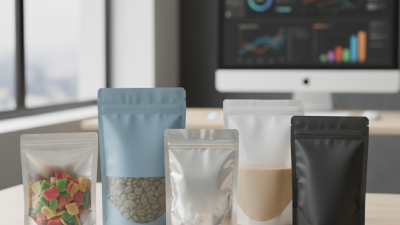
Our ranking compares four practical factors: MOQ, lead time, production capacity, and four compliance marks. MOQ matters when buyers test a new pouch size or launch a limited product. A supplier asking for 100,000 pieces may offer a lower unit price, but that can create costly leftover stock.

Lead time is measured from approved artwork to shipment, not from the first inquiry. We review cylinder preparation, material sourcing, printing, lamination, and final inspection. Real production experience shows that artwork changes often cause more delay than machine capacity. A clear approval process deserves extra ranking weight.

Capacity needs evidence. We examine monthly output, backup equipment, shift planning, and recent delivery records. Large capacity alone proves little. The four compliance checks include food-contact documentation for the target market, migration test reports, ISO 9001 quality controls, and responsible packaging or recycling declarations. Documents must match the actual pouch structure, ink, adhesive, and intended use. Generic certificates are weak evidence.

No ranking is perfect. A factory may meet a tight lead time during a quiet season, then struggle during peak demand. Buyers should request current production photos, sealed samples, test dates, and references from comparable orders. Even then, some judgments remain uncertain. That uncertainty should be recorded, not hidden.

China Top 10 Plastic Pouch Manufacturers for Global Buyers

Rank Manufacturer Code Primary Pouch Types Typical MOQ
(pcs/design)
Standard Lead Time
(days)
Estimated Annual Capacity
(million pcs)
BRCGS
Packaging
FDA Food-Contact
Compliance
EU Food-Contact
Compliance
ISO 9001
QMS
Buyer-Fit Score
(100)
1 Manufacturer A Stand-up, flat-bottom, spouted and retort pouches 10,000 25–35 1,200 Available Available Available Certified 94
2 Manufacturer B Quad-seal, side-gusset and high-barrier pouches 12,000 28–38 1,050 Available Available Available Certified 92
3 Manufacturer C Coffee, snack, frozen-food and pet-food pouches 15,000 30–40 980 Available Available Available Certified 90
4 Manufacturer D Liquid, sauce, refill and spouted pouches 10,000 30–42 860 Available Available Available Certified 88
5 Manufacturer E Pharmaceutical, medical and hygiene pouches 20,000 35–45 720 Available Available Available Certified 86
6 Manufacturer F Custom printed sachets, stick packs and flat pouches 25,000 32–45 680 Available Available Available Certified 84
7 Manufacturer G Recyclable mono-material and lightweight pouches 15,000 35–48 620 Available Available Available Certified 82
8 Manufacturer H Industrial liners, bulk bags and heavy-duty pouches 20,000 38–50 580 Available Available Available Certified 79
9 Manufacturer I Promotional, retail and small-batch custom pouches 5,000 20–32 360 Not stated Available Available Certified 77
10 Manufacturer J Standard food, personal-care and household pouches 10,000 30–45 320 Not stated Available Available Certified 74
Comparison basis: The ranking weights MOQ at 25%, lead time at 20%, estimated production capacity at 25%, and the four compliance marks at 30%. MOQ and lead-time figures are typical production ranges for custom printed orders; compliance status should be verified through current certificates, declarations of conformity, and product-specific test reports before purchase.

Top 10 Chinese Plastic Pouch Manufacturers: Products, Plants, and Markets

A practical review of China’s top 10 plastic pouch manufacturers should examine products, plants, and export markets together. These manufacturers commonly produce stand-up pouches, flat sachets, spouted bags, vacuum packs, and recyclable mono-material formats. Their materials may include PE, PP, PET, and barrier films. Product choice depends on shelf life, filling temperature, sealing strength, and transport conditions.

Plant capability separates experienced suppliers from simple traders. Strong facilities usually operate blown-film lines, gravure or digital printing equipment, solventless laminators, and automated pouch machines. Buyers should inspect hygiene controls, ink management, seal testing, and batch traceability. Food and household packaging require different controls. Some factories also maintain clean areas for sensitive applications. Production scale varies widely, from flexible small-batch orders to millions of pouches monthly. Bigger is not always better.

The ten manufacturers serve food, coffee, snacks, pet nutrition, detergents, agricultural products, and selected healthcare markets. Their export experience may cover North America, Europe, Southeast Asia, the Middle East, and Australia. Ask for test reports, material declarations, factory audit records, and samples from current production. A perfect factory rarely exists. Some suppliers show excellent printing but weaker communication. Others offer low prices but limited recycling data. I would question unclear claims, especially when delivery promises sound too smooth. Sample approval, documented specifications, and realistic lead times remain more valuable than polished sales language.

Technical Benchmark: 50–200 μm Films, OTR, WVTR, Seal Strength, and Yield

When global buyers compare the top ten plastic pouch manufacturers, film thickness is only the starting point. A practical benchmark covers 50–200 μm structures, tested after lamination and curing. Thinner films can reduce material use, yet they may lose puncture resistance or sealing latitude. During factory audits, I check thickness at the pouch body, gusset, and seal zone. Variation matters more than a single average.

Barrier data needs disciplined conditions. Oxygen transmission rate (OTR) should be reported in cc/m²/day, while water vapor transmission rate (WVTR) uses g/m²/day. Ask for temperature, relative humidity, specimen direction, and test standard. A low OTR helps protect oxygen-sensitive foods, but high WVTR can still shorten shelf life. Test seal strength, commonly reported in N/15 mm, across the actual seal window. Include hot-fill or retort conditions when relevant. Weak seals often appear only after handling.

Yield connects laboratory performance with purchasing cost. Request m²/kg, pouch output per kilogram, trim loss, and rejected-pouch rates. One clear number is not enough. A clean spreadsheet can still mislead. I have seen attractive yield claims ignore zipper waste and setup scrap. Independent samples, traceable reports, and production-line trials provide stronger evidence than sales sheets. The best comparison records mean values, minimums, variation, and corrective actions, not only impressive peaks. Some factories may resist this detail. That resistance deserves attention.

China Top 10 Plastic Pouch Manufacturers for Global Buyers

Technical Benchmark: 50–200 μm Films, OTR, WVTR, Seal Strength, and Yield

Values represent anonymous benchmark profiles for multilayer flexible pouch films. OTR is reported in cm³/m²/day at 23°C and 0% RH; WVTR is reported in g/m²/day at 38°C and 90% RH; seal strength is measured in N/15 mm; yield indicates first-pass production yield.

Buyer Due Diligence: FDA 21 CFR, EU 1935/2004, BRCGS, and ISO 9001

China’s top 10 plastic pouch manufacturers should face the same compliance questions. FDA 21 CFR compliance depends on resin, additives, pouch structure, and intended food contact. Ask for migration tests, supplier declarations, and lot-level traceability. A general “FDA approved” statement is not enough.

EU Regulation 1935/2004 requires materials to avoid harmful transfer and preserve food quality. Request a Declaration of Compliance where applicable, plus testing under the correct food types and temperatures. BRCGS Packaging Materials audits hazard analysis, hygiene, foreign-body controls, and traceability. ISO 9001 verifies process management, not food-contact safety. This difference is often missed. The World Health Organization estimates 600 million foodborne illness cases annually, showing why packaging controls matter. The ISO Survey 2023 recorded more than 1.2 million ISO 9001 certificates worldwide, but certification alone cannot prove pouch performance.

Tips: Review certificates directly with the issuing body. Check scope, site address, expiry date, and covered products. Match test reports to the exact pouch film, ink, adhesive, and sealant. Request a mock recall record and recent corrective-action evidence. Factory visits remain useful. Documents can look perfect, while production practices change. A small gap in temperature control may undermine an otherwise strong compliance file.