Leave Your Message

2026 Best Plastic Packaging Types for Global Buyers?

Global buyers entering 2026 face a practical question: which Plastic Packaging types offer safety, efficiency, and measurable value across different markets? The answer depends on product sensitivity, transport distance, recycling systems, and local compliance requirements. PET bottles may suit beverages and personal care products. HDPE containers often provide strong chemical resistance. PP tubs and closures perform well under repeated handling. Flexible LDPE films can reduce shipping weight, although recovery options remain uneven.

This guide compares these formats through a procurement-focused lens. It considers barrier performance, sealing reliability, material thickness, recycled content, labeling, and total delivered cost. Food, cosmetic, pharmaceutical, and industrial applications require different controls. Buyers should request migration testing, technical data sheets, batch traceability, and certificates from qualified suppliers. Regional rules can also affect resin selection, recycled-content claims, and extended producer responsibility fees. A package that works in Germany may need changes for Brazil, India, or the United States.

No single format wins every market. That assumption often fails. A lightweight pouch may lower freight emissions, yet limited collection infrastructure can weaken its environmental case. A rigid bottle may use more material, but its established recycling stream could support better recovery. Supplier claims also deserve careful review. Real performance depends on closure quality, storage temperature, filling speed, and handling damage. By examining these details, global buyers can make more reliable decisions instead of choosing packaging based only on price or appearance. Small testing steps matter. Mistakes still happen. Reliable sourcing means recognizing uncertainty, documenting evidence, and improving the specification before large-scale production.
2026 Best Plastic Packaging Types for Global Buyers?

Packaging’s 40% Share of Global Plastic Demand: The 2026 Market Baseline

2026 Best Plastic Packaging Types for Global Buyers?

Packaging remains the main engine of plastics demand. OECD’s Global Plastics Outlook identifies packaging as the largest application, near 40% of total use. UNEP also reports that packaging generates about 36% of global plastic production. The figures differ slightly. Definitions and reporting years are not identical.

For global buyers, flexible films, rigid containers, and closures remain practical choices. Mono-material PE or PP films can simplify sorting when local recycling systems accept them. PET bottles offer strong clarity and established collection in many markets. HDPE containers suit detergents, personal care, and household liquids because they resist impact. Packaging decisions should match the product, shipping route, filling line, and recovery system. Cheap resin is not always cheap packaging.

The Ellen MacArthur Foundation reports that flexible plastic packaging remains difficult to recycle at scale. This exposes a serious purchasing risk. A recyclable label alone proves little. Buyers should request resin identification, recycled-content evidence, migration testing, and transport trial results. PCR content can reduce virgin resin use, but quality may vary between suppliers. A thinner package may also fail during humid storage or long-distance handling. Real samples matter more than a polished specification sheet.
Flexible Formats and Their Up-to-60% Material Savings: Films, Pouches, Sachets

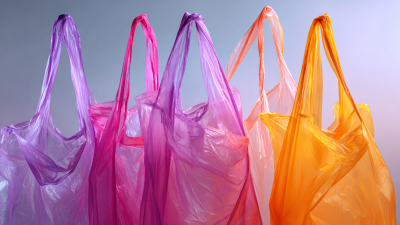
Flexible packaging is gaining attention among global buyers in 2026. Films, pouches, and sachets often need less plastic than bottles, tubs, or rigid trays. Industry lifecycle comparisons, including figures published by the Flexible Packaging Association, indicate potential material savings of up to 60% in selected applications. That figure is not automatic. Gauge, seal design, filling efficiency, and product protection determine the real result.

Smithers’ The Future of Flexible Packaging to 2028 identifies lightweighting, convenience, and longer shelf life as major market drivers. A thin multilayer film can reduce transport weight and storage volume. Stand-up pouches also provide larger printable surfaces and precise portion control. Sachets suit single-use doses, but their small size can complicate sorting and collection.

The packaging line matters, too. Poor sealing creates leaks, waste, and expensive product recalls.

Environmental performance needs more than a low material weight. The OECD Global Plastics Outlook reports that only 9% of global plastic waste was recycled in 2019. Buyers should request verified data for barrier performance, recycled content, recyclability, and end-of-life access. Ask suppliers for product-specific lifecycle assessments, not broad marketing claims. Some high-barrier structures still rely on multiple layers that are difficult to recycle. This weakness deserves honest evaluation.

Rigid Formats by Resin: PET, HDPE, and PP for Weight, Barrier, and Recovery

Rigid plastic packaging remains central to global purchasing decisions in 2026. Resin selection affects transport weight, product protection, and recovery potential. PET offers strong clarity and useful gas barrier performance for many beverages and personal-care liquids. Its light walls can reduce shipping mass. However, thin PET may deform under heat or rough handling. Clear packaging also exposes scratches and surface damage.

HDPE containers provide toughness and dependable moisture resistance. They suit chemical, household, and personal-care applications requiring impact tolerance. Their opaque appearance can protect light-sensitive contents, but it limits product visibility. PP is valued for low density, heat resistance, and repeated flexing. Hinged closures work well here. Yet PP performance varies widely with thickness, additives, and molding quality. A small cap can fail before the main container does.

Recovery depends on more than resin identification. Local collection systems, sorting equipment, labels, sleeves, and closures all influence actual outcomes. Buyers should request resin-specific test data, including drop tests, compression results, and barrier measurements. They should also check recovery conditions in each target market. I would not assume the lightest package is automatically the best option. That assumption needs evidence. A slightly heavier HDPE pack may prevent leakage during long-distance transport. Conversely, a simpler PET design may reduce material use and sorting confusion. Packaging decisions remain imperfect. Field trials often reveal details that laboratory samples miss.

2026 Best Plastic Packaging Types for Global Buyers? - Rigid Formats by Resin: PET, HDPE, and PP for Weight, Barrier, and Recovery

Resin Typical Rigid Formats Typical Density
(g/cm³)
Weight Considerations Oxygen Barrier Moisture Barrier Clarity and Appearance Resin Identification Code Recovery Considerations
PET
Polyethylene Terephthalate
Carbonated beverage bottles, water bottles, food jars, thermoformed trays, and transparent containers Approximately 1.33–1.40 Higher resin density than HDPE or PP, but strong stiffness can support lightweight bottles and thin-wall packaging designs. Good
Usually the strongest oxygen barrier of these three common resins in comparable uncoated rigid formats.
Moderate to good
Generally adequate for many beverages and foods; performance depends on wall thickness and crystallinity.
Naturally clear and glossy; can also be produced in translucent or opaque grades. #1 Widely collected in many beverage-container systems. Clear, well-sorted PET is generally more valuable for bottle-to-bottle or fiber recycling; caps, labels, colors, and residues can affect sorting and output quality.
HDPE
High-Density Polyethylene
Milk and juice bottles, household-cleaner bottles, personal-care containers, industrial jerry cans, and drums Approximately 0.94–0.97 Lower density than PET and good impact resistance can support lightweight, durable containers; required thickness varies with load and handling conditions. Moderate
Usually less effective than PET for oxygen-sensitive products unless thickness, additives, or barrier structures are optimized.
Very good
Low water-vapor transmission makes it suitable for many household, chemical, and moisture-sensitive products.
Naturally translucent to opaque; usually less glass-like than PET and commonly available in natural or colored formats. #2 Commonly accepted in rigid-plastic collection programs, but access differs by country and municipality. Natural, mono-material containers are generally easier to sort and recycle than heavily colored or multi-material designs.
PP
Polypropylene
Food tubs, yogurt cups, hot-fill containers, hinged closures, caps, pharmaceutical bottles, and reusable storage containers Approximately 0.90–0.91 Lowest density among the three, offering strong lightweighting potential. Good stiffness-to-weight performance is useful for tubs, caps, and thin-wall parts. Moderate to low
Often less effective than PET for oxygen-sensitive contents in standard uncoated structures.
Very good
Provides strong resistance to water vapor and is suitable for many moisture-sensitive products.
Usually translucent, cloudy, or opaque; clarity depends on grade, nucleation, processing, and wall thickness. #5 Collection and reprocessing availability is expanding but remains less consistent globally than for PET and HDPE. Rigid, clean, mono-material PP formats are generally the most suitable for mechanical recycling.
Technical note: Barrier performance is comparative rather than absolute. Actual results depend on resin grade, container geometry, wall thickness, crystallinity, additives, closures, storage temperature, filling process, and product chemistry. Recycling acceptance and recovery rates vary by market; a resin identification code does not guarantee local collection or recycling.

Recycling’s 9% Global Rate: How EPR and 2026 Rules Change Packaging Choice

The frequently cited 9% global plastic recycling rate exposes a practical gap: packaging may be recyclable, yet it may never reach a functioning recovery system. For global buyers, material selection now affects compliance, cost, and credibility. In 2026, extended producer responsibility (EPR) schemes will likely place higher fees on packaging that is difficult to collect, sort, or recycle. A low unit price can become expensive after reporting, eco-modulation, and recovery charges.

Mono-material PE or PP pouches usually offer a clearer recycling pathway than laminated structures with incompatible layers. PET bottles can perform well when labels, caps, colors, and recycled content follow local design guidance. Rigid packaging is often easier to sort than flexible film. Not always.

Buyers should request resin identification, recycled-content evidence, migration testing, and country-specific EPR reviews. Ask who collects the package after use. That question changes the specification.

A package marked recyclable is not automatically recycled. One market may accept film in collection bins, while another rejects it at the sorting line. Practical procurement reviews often reveal failures caused by late artwork changes, leaving no space for disposal instructions or producer data.

Some specifications promise high post-consumer content before supply is verified. That is a weak assumption. Use pilot shipments, supplier declarations, and independent testing before fixing the 2026 format. Even well-designed packaging can perform poorly when local infrastructure is missing.

Buyer Scorecard: Cost, MOQ, Shelf Life, Carbon, and Recycled-Content Targets

For 2026 sourcing, plastic packaging should be judged by a buyer scorecard, not unit price alone. Start with cost and MOQ. A low quotation can hide tooling, freight, and minimum-order inventory. Request landed cost at three volumes, such as 10,000, 50,000, and 250,000 units. Smaller MOQs reduce cash exposure but may increase resin and setup costs. Keep the math visible.

Shelf life needs evidence. Ask for oxygen, moisture, light, and seal-performance data under the intended storage conditions. A thinner pouch may cut material use, yet a weak barrier can increase product waste. That trade-off matters.

The OECD’s Global Plastics Outlook (2022) reported 353 million tonnes of plastic waste in 2019, with only 9% successfully recycled.

Packaging choices should therefore include an end-of-use test, not only a production test.

Carbon scoring should compare resin weight, recycled content, manufacturing energy, and transport distance. Use supplier-specific life-cycle data where possible, because generic averages can mislead. UNEP’s Turning off the Tap (2023) identifies reuse, recycling, and material reduction as major routes for reducing plastic pollution.

Recycled-content targets also require documented input sources, batch consistency, odor testing, and color limits. PCR can perform well. Sometimes it does not. Buyers should record that uncertainty instead of hiding it.

Cost at 25% MOQ at 15% Shelf life at 25% Carbon at 20% Recycled content at 15%

These percentages are adjustable, but the trade-offs must be documented.